
Gluten-free options for travelers in the desert
are often a major concern for those who want to experience the majesty of the Arabian sands without the risk of a health flare-up. Imagine standing on the crest of a golden dune at sunset, the air cooling as the sky turns purple, only to feel the anxiety of a buffet dinner that might be a minefield of hidden wheat. Whether you are visiting the vast Empty Quarter or taking a luxury safari in the Dubai Desert Conservation Reserve, knowing your culinary landscape is essential for a stress-free adventure.
In this exhaustive guide, we will break down the most reliable gluten-free options for travelers in the desert, hidden risks to avoid, and the cultural context of Bedouin cuisine that, unexpectedly makes the desert one of the safest places for a gluten-sensitive diner if you know what to look for.
1. The Biological and Cultural Context of Desert Dining
To truly appreciate the gluten-free options for travelers in the desert, one must look back at the nomadic history of the region. The Bedouin tribes were the ultimate minimalists. Their diet was dictated by what could survive the heat and what could be carried on the back of a camel.
Historically, the Bedouin diet consisted of:
-
Protein: Goat, camel, and occasionally hunted game.
-
Dairy: Camel and goat milk (rich in Vitamin C and naturally GF).
-
Fruit: Dates (the “bread of the desert”).
-
Grains: While wheat arrived later through trade, the primary staples were rice and millet in various regions.
This historical framework is why, today, the most authentic gluten-free options for travelers in the desert are often the simplest ones. The danger only arose with modern industrialization, where wheat became a cheap filler for spices and sauces.
The Nutritional Challenge
Travelers with celiac disease often suffer from malabsorption of Iron, Vitamin D, and B12. When you combine these deficiencies with the intense desert heat, the risk of fatigue and heatstroke increases. Therefore, choosing the right gluten-free options for travelers in the desert isn’t just about avoiding a stomach ache; it’s about maintaining the stamina to enjoy the trip.
2. 12 Essential Gluten-Free Options for Travelers in the Desert
When you find yourself at a desert camp, look for these twelve items. They are the “Green Zone” for any gluten-sensitive traveler.
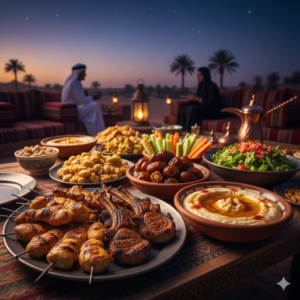
1. Simple Grilled Meats (The Mashawi)
Most desert safaris feature a BBQ. Focus on “whole” pieces of meat like lamb chops or chicken thighs. Avoid “Kofta” (minced meat) unless you can verify no breadcrumbs were used.
2. Traditional Hummus
A blend of chickpeas and tahini. It is a high-protein, safe staple. Just remember: No dipping the pita! Use veggie sticks or simply eat it with a spoon.
3. Mutabal (Eggplant Caviar)
This smoky dip is almost always safe. It uses charred eggplant and yogurt/tahini. It’s one of the best gluten-free options for travelers in the desert because it’s naturally creamy without flour.
4. Saffron or Turmeric Rice
Rice is your best friend. In dishes like Mandi or Kabsa, the rice is cooked with aromatic spices. Warning: Check for brown vermicelli threads (pasta) often mixed into “Ouzi” rice.
5. Madfoon (Slow-Cooked Meat)
This is meat cooked in an underground pit. It is marinated in its own juices and spices. It is the gold standard of gluten-free options for travelers in the desert.
6. Fresh Desert Dates
Dates are naturally gluten-free and packed with potassium, which helps prevent cramping in the heat.
7. Camel Milk
If you can find it, try it. It is naturally GF and contains three times more Vitamin C than cow’s milk.
8. Grilled Halloumi Cheese
A salty, delicious protein source. Ensure it isn’t grilled on the same spot where bread was toasted (ask for a clean section of the grill).
9. Lentil Soup (Shorbat Adas)
Usually safe and incredibly filling. Always double-check that the chef hasn’t used a flour-based “roux” to thicken it.
10. Fresh Seasonal Fruit
Watermelon, pineapple, and oranges are ubiquitous. They are the safest way to satisfy a sweet tooth.
11. Stuffed Vine Leaves (Warak Enab)
As long as the filling is purely rice and herbs, these are a fantastic snack.
12. Arabic Coffee (Gahwa)
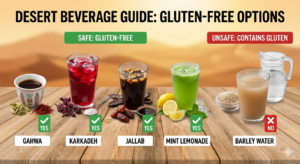
Made with lightly roasted beans, cardamom, and saffron. It is 100% gluten-free and a beautiful cultural experience.
3. Breakfast in the Dunes: Safe Morning Starters
Waking up to a desert sunrise is a spiritual experience, but the traditional breakfast can be heavy on bread (Khubz). To stay within the realm of gluten-free options for travelers in the desert, pivot toward the following:
-
Shakshuka: Poached eggs in a spicy tomato and bell pepper sauce. It is naturally GF and incredibly satisfying.
-
Balaleet: This is a sweet-and-savory Emirati dish. WARNING: It is made with vermicelli noodles. While it looks like rice, it is wheat-based. Avoid this.
-
Foul Mudammas: Mashed fava beans with olive oil and cumin. This is a powerhouse of fiber and protein.
4. Lunch and Snacks: Fueling Your Adventure
If you are on a full-day dune bashing trip, you need portable gluten-free options for travelers in the desert.
-
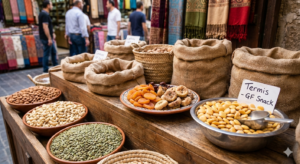
Nuts and Seeds: Almonds, cashews, and pumpkin seeds are widely available in Middle Eastern souks. They are stable in the heat.
-
Dried Apricots and Figs: Great for slow-release energy.
-
Lupini Beans (Termis): Often sold as a street snack or desert snack, these are boiled, salted, and naturally GF.
5. The Dinner Feast: Navigating the Safari Buffet
The dinner buffet is where the most significant risks lie. When scanning the gluten-free options for travelers in the desert at a buffet, use the “First in Line” rule.
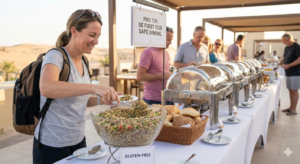
The Salad Bar
-
Safe: Cucumber and tomato salad (Salata Khadra), pickles, olives.
-
Avoid: Tabbouleh (contains bulgur) and Fattoush (contains fried bread).
6. Cultural Traps: The “Hidden Enemy” Ingredients
Even the most seasoned travelers can get “glutened” by these hidden ingredients. When searching for gluten-free options for travelers in the desert, keep an eye out for:
-
Maggi Cubes: Many local kitchens use these for flavor. Some variants contain wheat flour as a stabilizer.
-
Soy Sauce: Sometimes used in modern “fusion” marinades for chicken.
-
Semolina: Found in many Arabic desserts like Basbousa or Namoura.
-
Malt Vinegar: Occasionally used in salad dressings.
7. The Science of Cross-Contamination in Remote Camps
Cross-contamination is the biggest hurdle for gluten-free options for travelers in the desert. In a desert kitchen, space is tight.
-
The Shared Grill: Chefs often toast pita bread directly on the grill next to the meat.
-
The Wind: In a high-wind desert environment, flour from the bread-making station can literally blow into other dishes.
-
The Recommendation: Always choose a reputable tour operator like Platinum Heritage or Sonara Camp, as they have dedicated food safety protocols for allergies.
8. Beverage Pairings: Safe Sips from Gahwa to Jallab
Staying hydrated is critical. Fortunately, most traditional desert drinks are excellent gluten-free options for travelers in the desert.
9. Language Guide: How to Communicate Your Needs in Arabic
Communication is your strongest tool. If you want to find the best gluten-free options for travelers in the desert, you need to be able to tell the staff exactly what you need.
-
“I have a gluten allergy”: Ana andi hassasiya min al-gluten.
-
“Is there flour in this?”: Fi tahin fi hada?
-
“I cannot eat bread”: Ma agdar akul khubz.
-
“Is this rice pure?”: Hada ruz khalis? (Useful for checking for vermicelli).
10. Luxury vs. Rustic Safaris: Choosing Your Operator
When it comes to gluten-free options for travelers in the desert, the type of safari you book matters.
-
Budget Safaris ($30-$50): Often involve mass-produced catering. The risk of cross-contamination is high. Not recommended for celiacs.
-
Mid-Range Safaris ($80-$150): Better quality control. Usually able to accommodate requests if notified 24 hours in advance.
-
Luxury Safaris ($200+): These operators, such as Al Maha Resort, treat dietary restrictions with the same rigor as a five-star hotel.
11. The Essential Gluten-Free Desert Packing List
Never rely 100% on a tour operator. Pack these items to ensure you always have gluten-free options for travelers in the desert:
-
GF Beef Jerky: (Ensure no soy sauce marinade).
-
Rice Cakes: To use with dips.
-
Electrolyte Tablets: Essential for celiacs who lose minerals faster.
-
Translation Cards: Physical cards in Arabic.
-
Individual Hummus Packs: For a safe lunch on the go.
-
Nut Butter Packets: High-calorie fuel.
-
GF Protein Bars: A quick fix when the buffet looks risky.
-
Hand Sanitizer: To clean hands after touching shared safari equipment.
-
Probiotics: To help your gut recover if an accidental exposure occurs.
-
A Small Cooler Bag: To keep your GF snacks from melting.
12. Health and Hydration: Managing Celiac in Heat
A “glutening” incident in 45°C (113°F) heat is significantly more dangerous than one at home. Nausea and diarrhea can lead to rapid dehydration.
If you suspect you’ve eaten something off the gluten-free options for travelers in the desert list that wasn’t safe:
-
Hydrate immediately: Drink water with electrolytes.
-
Rest: Find shade or an air-conditioned vehicle.
-
Notify your guide: They are trained in basic first aid and desert safety.
13. A 24-Hour Safe Itinerary: From Sunrise to Stargazing
Here is how a perfect day of finding gluten-free options for travelers in the desert looks:
-
06:00 AM: Sunrise meditation with black coffee and 3 dates.
-
08:00 AM: Breakfast of Shakshuka (no bread) and fresh fruit.
-
12:00 PM: Lunch of grilled chicken skewers and a green salad.
-
03:00 PM: Afternoon snack of almonds and Karkadeh tea.
-
07:00 PM: Sunset Dinner—First in line for the BBQ. Lamb chops, saffron rice, and a double serving of hummus.
-
09:00 PM: Dessert of fresh watermelon under the stars.
14. The Future of Inclusive Desert Tourism
The UAE and surrounding regions are becoming world leaders in culinary tourism. The awareness of celiac disease is growing through organizations like the Celiac Disease Foundation. We expect to see more 100% gluten-free desert camps in the next few years.
15. Conclusion: The Desert is Open to Everyone
Finding gluten-free options for travelers in the desert is not about restriction; it’s about returning to the roots of Arabian cuisine. By focusing on fresh, fire-grilled proteins, sun-ripened fruits, and ancient grains like rice, you can experience the magic of the dunes without compromise. The golden sands are waiting for you. With the right knowledge and a little preparation, your desert adventure will be as delicious as it is breathtaking.
Ultimately, choosing to prioritize these authentic food choices allows you to strip away the complexities of modern processed foods and dine as the Bedouins have for centuries—authentically and with deep respect for the land. It’s about more than just avoiding wheat; it’s about reclaiming your sense of discovery. When you aren’t worried about cross-contamination, you can focus on the rhythmic sound of the camels, the shifting colors of the dunes, and the breathtaking silence of the desert night.
Whether you’re enjoying a simple plate of dates or a gourmet grilled feast, your dietary needs act as a bridge to a healthier, more traditional way of eating. So, pack your bags with confidence, keep your Arabic translation card handy, and prepare for a journey where the only thing that’s “limited” is the distance between you and the stars.

