Is It Ethical to Ride Camels? Examining Animal Welfare and Al Khaima’s Ethical Approach
For many travelers planning a trip to desert regions like Dubai, Morocco, or Egypt, a camel ride is high on the bucket list. It’s an iconic image: silhouetted figures bobbing gently atop “ships of the desert” against a fiery sunset. However, as global awareness regarding animal welfare grows, a crucial question is being asked more frequently: Is it ethical to ride camels?
This question does not have a simple yes or no answer. Like many animal tourism activities, the ethics depend entirely on how it is done. The reality is a spectrum, ranging from exploitative practices that prioritize profit over animal well-being, to deeply respectful approaches that honor the animal’s history and needs.
In this comprehensive guide, we will delve deep into the welfare considerations surrounding camel tourism. We will explore the historical context, identify the red flags of unethical operators, and showcase how companies like Al Khaima Tours are redefining the industry by putting the camels first. If you are asking yourself, “Is it ethical to ride camels?”, keep reading to make an informed and responsible choice for your next adventure.
1. Understanding the History: Camels and Human Connection
To properly address the question, “Is it ethical to ride camels?”, we must first understand the deep historical bond between humans and these remarkable creatures. For thousands of years, the Dromedary camel (the one-humped species found in the Arabian Peninsula and North Africa) has not just been a beast of burden; it has been a partner in survival.
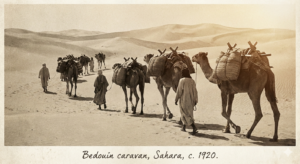
Bedouin cultures could not have thrived in the harsh desert environments without the camel. They provided transport across vast, waterless landscapes, milk and meat for sustenance, and wool for clothing and shelter. The relationship was one of mutual dependence and deep respect. A camel’s health was directly tied to a family’s survival.
This historical context is important because it shows that camels are a domesticated species, bred over millennia to work alongside humans. Unlike riding a wild animal like an elephant or swimming with captive dolphins practices widely condemned by welfare experts riding a domesticated camel is not inherently unethical in principle. Their physiology, particularly their ability to carry significant weight over long distances, is evolved for this purpose.
However, the modern tourism industry is a far cry from the traditional Bedouin lifestyle. The context has shifted from necessity to entertainment, and this is where ethical lines often get blurred. The question changes from “Can we ride camels?” to “How are these camels being treated in a commercial setting?”
The transition from a respected survival partner to a tourist attraction has introduced new pressures on these animals. The demand for a quick photo opportunity can lead to practices that the original caretakers of these animals would never have countenanced. Therefore, understanding history is the first step, but examining modern practices is the crucial second step in determining if it is ethical to ride camels today.
2. The Ethical Dilemma: Why Ask “Is It Ethical to Ride Camels?”
When tourists ask, “Is it ethical to ride camels?”, they are usually reacting to visible signs of distress or questioning what happens behind the scenes. The concerns can be broadly categorized into physical and psychological welfare.
Physical Welfare Concerns
The most immediate indicators of an unethical operation relate to the camel’s physical condition.
-
Overloading and Weight Limits: While camels are strong, they have limits. A common issue in mass tourism is overloading animals with too many riders or excessively heavy tourists. Unlike a horse, whose spine is relatively flat, a camel’s spine goes up into the hump. Weight must be carefully distributed around the hump, not directly on top of it. Chronic overloading can lead to severe back and joint problems, causing permanent pain.
-
Improper Equipment: The saddle, or hawija, is critical. Ill-fitting saddles that rub can cause open sores, particularly on the hump and ribcage. In some regions, cruel methods like metal nose pegs are used for control. If a rider pulls the rein, it causes pain in the sensitive nose tissue, forcing compliance through fear rather than training.
-
Lack of Basic Care: Camels are famous for going without water, but this is a survival mechanism, not a lifestyle choice. Working camels need regular access to clean water, quality forage, and shade to rest during the hottest parts of the day. In some profit-driven operations, these basic needs are neglected to maximize working hours.
Psychological Welfare Concerns
Just as important as physical health is the animal’s mental state.
-
Chronic Stress: Imagine a life of constant noise, crowds of strangers touching you, and being forced to stand up and sit down repeatedly on command for hours on end. This is the reality for many tourism camels. This chronic stress can lead to a suppressed immune system and behavioral issues.
-
Stereotypic Behaviors: When you ask, “Is it ethical to ride camels?”, look at their behavior. Are they standing calmly, chewing cud? Or are they swaying rhythmically from side to side, bobbing their heads incessantly, or pacing? These are known as stereotypic behaviors, which are coping mechanisms for severe boredom, frustration, and stress in captive environments.
-
Training Methods: How was the camel trained to accept a rider? Ethical training uses positive reinforcement—rewarding desired behavior with food or praise. Unethical training relies on breaking the animal’s spirit through punishment, fear, and pain, often using whips or the aforementioned nose pegs. A camel that obeys out of fear is not a happy animal.
When you see a camel that is skinny, has visible sores, looks terrified of its handler, or is constantly shifting and swaying, the answer to “Is it ethical to ride camels?” at that specific location is a definitive no.
3. The Tourism Industry Problem: Quantity Over Quality
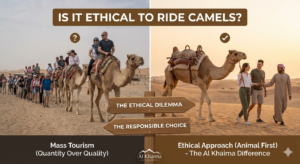
The root cause of most welfare issues is the business model of mass tourism. In many popular desert destinations, the goal is to process as many tourists as possible in the shortest amount of time.
A standard, budget-tier desert safari might include a “camel ride,” but this often amounts to a 2-minute loop in a small enclosure near a noisy parking lot. The camels are made to kneel and stand dozens of times an hour, placing immense strain on their joints. They are regarded as equipment, not living beings.
Often, these operators do not own the camels but rent them from local owners who are paid by the ride. This creates a perverse incentive: the more rides, the more money. There is no financial incentive to let a camel rest. Furthermore, in some countries, animal welfare regulations are weak or poorly enforced, allowing substandard operators to continue without consequence.
Many well-intentioned tourists simply don’t know what to look for. They assume that if an activity is offered by a tour company, it must be okay. They take their photo, enjoy the momentary novelty, and move on, unaware of the suffering that makes it possible. This is why raising the question, “Is it ethical to ride camels?”, is so vital—it forces a closer look at the industry norms.
Educating travelers is the only way to shift the demand toward more responsible practices. By choosing to support companies that prioritize welfare, tourists can use their wallet to vote for a more ethical industry.
4. A Better Way Forward: Al Khaima’s Commitment to Ethical Camel Riding
So, is it ethical to ride camels at all? Yes, it can be. There are operators who are bucking the industry trend and proving that tourism and animal welfare can coexist. Al Khaima Tours is a prime example of a company that has built its camel experiences around the highest ethical standards.
For Al Khaima, the answer to “Is it ethical to ride camels?” is “Only if the camel’s well-being comes first.” Here is how they do things differently.
Prioritizing Animal Health and Comfort
At Al Khaima, the camels are treated as valued members of the team, not machinery.
-
Strict Weight Limits: Al Khaima enforces strict weight limits for riders. They understand the biomechanics of the camel and ensure that no animal is ever overloaded. This policy is non-negotiable, prioritizing long-term health over short-term profit.
-
Custom-Fit Saddles: Gone are the generic, poorly padded saddles. Al Khaima uses traditional-style saddles that are heavily padded and custom-fitted to each individual camel’s back shape. This prevents rubbing and pressure sores, ensuring a comfortable experience for the animal.
-
Veterinary Care and Nutrition: Their herd receives regular check-ups from specialized large-animal veterinarians, not just when they are sick. They are fed a high-quality diet appropriate for their workload and have constant access to clean, fresh water in their resting enclosures.
-
Adequate Rest: Crucially, Al Khaima’s camels work limited hours. They operate on a rotation system, ensuring every animal gets ample downtime in the shade to rest, eat, and socialize with other camels. You won’t see their camels working from dawn till dusk without a break.
Positive Training and Handling
The relationship between handler and camel is built on trust.
-
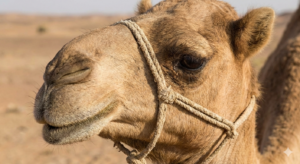
No Painful Restraints: Al Khaima strictly prohibits the use of metal nose pegs, whips, or any cruel training devices. Handlers use traditional rope halters and guide the camels using voice commands and gentle physical cues.
-
Skilled Handlers: The camel handlers at Al Khaima are not just laborers; they are skilled professionals who understand camel psychology and body language. They can recognize signs of fatigue or irritation and are empowered to pull a camel from rotation if it’s not having a good day.
-
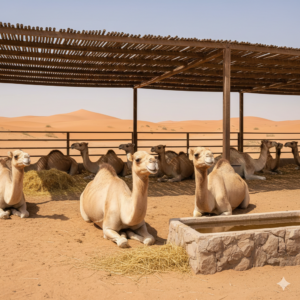
Natural Behaviors: When not working, the camels are kept in spacious paddocks where they can express natural behaviors, such as rolling in the sand and interacting with their herd-mates. This social time is essential for their psychological well-being.
The Guest Experience: Education Over Entertainment
Al Khaima shifts the focus from a quick amusement ride to an educational encounter.
-
Small Group Sizes: By limiting group sizes, they reduce the noise and chaos around the camels, creating a calmer environment for everyone.
-
Meeting the Camels: Before any ride, guests are introduced to the camels. Handlers share their names, ages, and individual personalities. They educate guests on camel biology, their history in the desert, and how to approach them respectfully. This fosters a connection and encourages guests to see the animal as an individual.
-
Alternatives to Riding: Al Khaima recognizes that some guests, after asking themselves “Is it ethical to ride camels?”, may decide they are not comfortable doing so. They offer rewarding alternatives, such as feeding, grooming, or simply walking alongside these majestic creatures on a desert trek. This ensures everyone can have a meaningful interaction without feeling pressured to ride.
By integrating these practices, Al Khaima demonstrates that when you ask, “Is it ethical to ride camels?”, the answer can be a resounding yes, provided the operator is willing to invest in the necessary care and respect. You can learn more about their commitment to sustainability and animal welfare on their website’s dedicated [link to internal ‘About Us’ or ‘Sustainability’ page] page.
5. How Tourists Can Make Ethical Choices
As a traveler, you hold the power. By asking the right questions and knowing what to look for, you can ensure your desert experience aligns with your values. When trying to determine, “Is it ethical to ride camels with this specific company?”, consider the following:
-
Observe the Animals: Before booking, look at photos or observe the animals in person. Are they a healthy weight, with ribs covered but not obscured by fat? is their coat clean and free of sores? Do they look calm and curious, or fearful and agitated?
-
Check the Equipment: Look for padding under the saddle. Are there any signs of wounds around the nose or mouth? Avoid any operator using nose pegs.
-
Ask Questions: Don’t be afraid to ask the tour operator directly about their animal welfare policies. Ask:
-
“How many hours a day do your camels work?”
-
“Do you have weight limits for riders?”
-
“How are your camels trained?”
-
“What happens to your camels when they are too old to work?”
-
-
Look for Reputable Certifications: While not always available, look for endorsements from recognized animal welfare organizations. Resources like the World Animal Protection provide guidelines on being an animal-friendly tourist. [Link to an external resource on animal-friendly tourism guidelines, e.g., World Animal Protection’s site].
-
Be Willing to Pay More: Ethical care costs money. High-quality feed, veterinary care, good equipment, and fair wages for skilled handlers all add to the operating costs. A cheap tour almost always comes at the expense of the animal’s welfare. Be prepared to pay a premium for a responsible operator like Al Khaima.
Ultimately, if your gut tells you something is wrong, trust it. It is better to miss out on a photo opportunity than to support cruelty.
6. Conclusion
The question, “Is it ethical to ride camels?”, is one that every responsible traveler should ask. As we have explored, the answer is nuanced. While the historical bond between humans and camels provides a foundation for ethical riding, the demands of modern mass tourism have often corrupted this relationship, leading to exploitation and suffering.
However, it is not necessary to boycott camel riding altogether. Instead, the solution lies in supporting operators who are pioneering a better way. Companies like Al Khaima Tours prove that it is possible to offer incredible guest experiences while holding the highest standards of animal welfare.
By prioritizing health, using positive training methods, and focusing on education, Al Khaima ensures that the answer to “Is it ethical to ride camels?” on their tours is an affirmative one. When you choose an ethical operator, you are not just having a memorable vacation; you are actively casting a vote for a more compassionate tourism industry. So, go ahead and plan that desert adventure, but do your research, choose wisely, and ensure your encounter with the “ship of the desert” is one founded on respect and care.

