
Difference between Bedouin coffee and regular coffee
is not merely a matter of taste; it is a profound distinction in culture, chemistry, and communal connection. For the traveler sitting in a sun-scorched tent in the Wadi Rum or a luxury majlis in Dubai, the steaming liquid poured from a golden pot represents a thousand years of history. To the Western office worker, a cup of coffee is often a functional fuel—a quick jolt of caffeine to kickstart the day. However, in the heart of the desert, coffee is a language of peace, a symbol of protection, and an art form.
In this extensive guide, we will dive deep into every nuance of the difference between Bedouin coffee and regular coffee, exploring everything from the roasting techniques to the intricate etiquette of the desert.
1. The Origins: History in a Cup
To understand the difference between Bedouin coffee and regular coffee, one must look back to the 15th century. While “regular” coffee as understood in the West, found its footing through European trade and later the industrial revolution, Bedouin coffee (Gahwa) is the direct descendant of the original coffee discoveries in Ethiopia and Yemen.
For the Bedouin, coffee was a gift from the heavens that allowed for survival in harsh conditions. It was never a commodity to be rushed. Instead, it was an essential part of the Karam (generosity) culture. In contrast, regular coffee evolved into a global industry focused on yield, speed, and variety.
2. The Beans: Light vs. Dark Roasting
The first technical difference between Bedouin coffee and regular coffee lies in the roast.
-
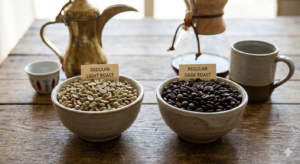
Regular Coffee: Typically uses beans roasted at high temperatures for longer durations. This results in the dark, oily beans we see in espresso blends. The goal is often to caramelize the sugars and extract deep, chocolatey, or nutty notes.
-
Bedouin Coffee: Uses a very light roast. Sometimes, the beans are only roasted until they reach a pale “blonde” or cinnamon color. This preserves the natural, grassy flavors of the coffee cherry and results in a lighter, tea-like consistency.
3. The Spices: The Soul of the Desert
Perhaps the most striking difference between Bedouin coffee and regular coffee is the aromatic profile. Regular coffee enthusiasts usually seek the “pure” taste of the bean, perhaps adding milk or sugar later.
Bedouin coffee is almost never served “pure.” It is an alchemy of:
-
Cardamom: The primary spice, added in generous amounts.
-
Saffron: Used in premium blends to give a golden hue and a floral aroma.
-
Cloves: Adds a subtle medicinal heat.
-
Rose Water: Occasionally added at the very end for a delicate finish.
Sugar is strictly forbidden in traditional Bedouin coffee. The sweetness comes from the dates served on the side, creating a perfect balance of bitter and sweet.
4. Preparation Tools: The Dallah vs. The Espresso Machine
The physical tools used highlight a massive difference between Bedouin coffee and regular coffee.
The Dallah
The Dallah is a traditional Arabic coffee pot with a long, curved beak and a bulbous body. It is often made of brass or copper. The shape is designed to trap the sediment at the bottom while allowing the aromatic oils to pour freely.
The Regular Setup
Regular coffee relies on high-pressure machines (espresso), paper filters (drip), or mesh screens (French press). These tools are designed to filter out the “fines” and produce a clean, sediment-free cup. Bedouin coffee is unfiltered, letting the fine powder settle naturally.
5. The Brewing Process: A Lesson in Patience
The difference between Bedouin coffee and regular coffee brewing techniques is a study in chemistry.
-
Regular Coffee: Uses precision. We measure the temperature of the water and the grind size to the micron.
-
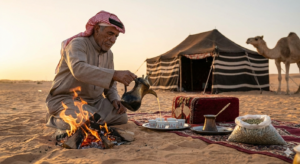
Bedouin Coffee: Is boiled. The coffee powder is added to boiling water in the Dallah and allowed to simmer for 15–20 minutes. The cardamom is added only in the last few minutes to preserve its volatile oils.
6. Flavor Profiles: Bitter Aromatic vs. Acidic Sweet
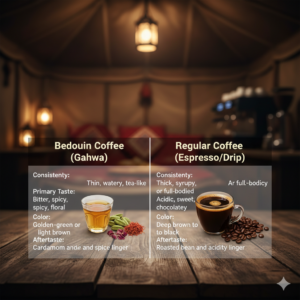
When you taste the difference between Bedouin coffee and regular coffee, the sensation is night and day.
7. The Ritual of Serving: Finjals and Etiquette
This is where the difference between Bedouin coffee and regular coffee becomes most apparent to the guest. Regular coffee is often served in a large mug or a takeaway cup, meant to be consumed while doing something else.
Bedouin Coffee Rituals:
-
The Finjal: Coffee is served in tiny, handle-less cups called finjals.
-
The Pour: The host holds the Dallah in the left hand and the finjal in the right. The cup is only filled one-quarter to one-third full. Filling a cup to the top is an insult, suggesting you want the guest to drink and leave quickly.
-
The “Shake”: When you have had enough, you gently shake your finjal from side to side. If you simply hand it back, the host will continue to pour.
8. The Social Impact: Hospitality vs. Efficiency
In the West, regular coffee is a tool for productivity—a fuel source for the “grind.” In the desert, the primary difference between Bedouin coffee and regular coffee is that Gahwa is a tool for diplomacy.
Tribal disputes have been settled over a pot of coffee. In the past, if a guest refused to drink the coffee offered, it was a clear signal that they had a request or a grievance that needed to be addressed first. Only when the host agreed to help would the guest drink. This “Coffee of Request” creates a sacred contract of honor that you would never find at a local Starbucks.
While modern coffee culture celebrates the “grab-and-go” lifestyle, Gahwa demands that you slow down. In the Majlis (the sitting room), the rhythmic clinking of the Finjan (the small, handleless cup) against the Dallah (the coffee pot) serves as a soundtrack to mediation rather than a countdown to a deadline.
To the Bedouin, speed is the enemy of sincerity. Efficiency-driven cultures prioritize the caffeine hit to fuel the next meeting, but Gahwa culture prioritizes the meeting itself. Each pour is a silent reaffirmation of a bond; the cup is intentionally never filled to the brim, symbolizing a bottomless well of hospitality and a host who is never “finished” serving their guest. In this space, the coffee is less of a beverage and more of a bridge between souls.
9. Health Benefits and Caffeine Content
One might assume that the light-colored Bedouin coffee is weak. This is a misconception. In fact, the chemical reality follows a simple inverse relationship:

Because the beans are lightly roasted, they actually retain more caffeine than dark-roasted beans, which lose chemical potency as they are heated for longer durations. However, because the Finjan is so small, you consume less per serving, allowing for a controlled, steady alertness rather than a sudden spike.
The addition of cardamom acts as a natural digestive aid, which is why Bedouin coffee is traditionally served after a heavy meal like the traditional BBQ dinner menu at Al Khaima. But the benefits don’t stop at digestion. Gahwa is often infused with saffron and cloves, turning a simple caffeine fix into an antioxidant powerhouse.
While a dark-roast espresso might provide a jittery “jolt,” the spices in Bedouin coffee serve as a metabolic buffer, often reducing the acidity that leads to heartburn. This “golden liquid” acts as a natural anti-inflammatory and mood enhancer. It’s a sophisticated delivery system: providing the mental clarity needed for desert navigation or tribal negotiations, while remaining gentle enough on the system to be enjoyed multiple times throughout the evening without the dreaded “caffeine crash.”
10. Regional Variations of Bedouin Coffee
Even within the desert, the difference between Bedouin coffee and regular coffee changes by geography. The “perfect cup” is a moving target that shifts as you cross borders, reflecting the local history and the ancient spice trade routes that once crisscrossed the sands.
-
Saudi Arabia: In the Najd region (central Saudi), the coffee is famously light—almost a sun-kissed yellow or lime-gold. It is heavily infused with saffron, which isn’t just for flavor; it’s a display of wealth and prestige. In the Hejaz (west), it tends to be slightly darker but still remains a far cry from the charred roasts of the West.
-
Jordan/Palestine: Here, the coffee takes a stoic, more intense turn known as “Sada.” It is a significantly darker roast, leaning into an unapologetic bitterness. To the tribes of the Levant, this strength is a point of pride, symbolizing resilience. It is almost always heavy on the cardamom, providing a cooling “menthol” finish to the dark brew.
-
UAE & Oman: The Emirati style is a sophisticated medium roast, often acting as a bridge between its neighbors. The secret here is the addition of rose water and cloves, reflecting the region’s history as a global maritime trading hub. This creates a “perfumed” profile that is floral, spicy, and incredibly smooth.
These variations prove that Gahwa is more than a recipe; it is a liquid map of the tribe’s heritage. Whether it is the floral notes of the coast or the bitter punch of the mountains, each cup tells you exactly where you are standing in the Arab world.
11. Conclusion: Why the Difference Matters
The difference between Bedouin coffee and regular coffee is the difference between a pause and a rush. One is a ceremony that demands your presence; the other is a utility that supports your absence. To drink Bedouin coffee is to accept an invitation into a world where the guest is king and time is measured by the cooling of a pot, not the ticking of a clock. Whether you prefer the complex acidity of a regular pour-over or the spiced warmth of the desert, understanding these traditions enriches every sip.
Ultimately, choosing a cup of Gahwa over a standard latte is a choice to prioritize the human element over the mechanical. In our hyper-connected, yet strangely isolated modern era, the Bedouin tradition offers a vital corrective. It reminds us that coffee was never meant to be a solo pursuit or a frantic fuel-up in a plastic cup. Instead, it is a shared breath—a moment where the boundaries between stranger and kin dissolve over a golden pour.
When you sit in a Majlis, you aren’t just drinking a beverage; you are participating in a living history that has outlasted empires. The ritual of the three cups—Al-Daif (for the guest), Al-Kaif (for the mood), and Al-Saif (for the sword or loyalty)—underscores a commitment to community that goes deeper than any modern loyalty program. It teaches us that true hospitality isn’t about the volume of what is served, but the honor shown while pouring it.
So, the next time you find yourself reaching for a quick caffeine fix, consider the Bedouin alternative. It is a reminder that while the world outside may be moving at breakneck speed, there is always room to sit, to listen, and to honor the person across from you. In the desert, coffee isn’t just a drink; it’s the heartbeat of a culture that refuses to be rushed.

