
Should We Wear Sandals or Shoes in Safari Desert Landscapes?
This is perhaps the most debated question among travelers packing their bags for a trip to the United Arab Emirates. When you are standing in your hotel room in Downtown Dubai, staring at your suitcase and planning outfits for the coming days, the choice seems simple. Sandals feel light, breathable, and convenient. Shoes feel sturdy, protective, and reliable. However, once you find yourself standing on top of a towering sand dune, with the sun blazing overhead and warm desert wind carrying fine grains of sand into every fold of fabric, that footwear decision suddenly feels far more important than expected.
The desert is a land of contrasts. It is visually stunning yet physically demanding, calm yet capable of testing human endurance. Your feet play a crucial role in how comfortably and safely you experience this environment. A poor footwear choice can quickly turn a once‑in‑a‑lifetime safari into an uncomfortable, painful experience filled with blisters, burns, and constant irritation. This detailed guide explores every dimension of the sandals‑versus‑shoes debate to help you confidently decide: should we wear sandals or shoes in safari desert environments?
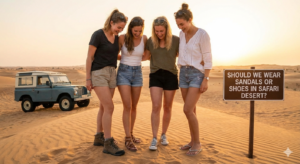
1. The Core Dilemma: Freedom Versus Protection
When travelers ask should we wear sandals or shoes in safari desert settings, they are unknowingly weighing two opposing priorities. On one side is freedom. Sandals allow air circulation, quick movement, and an easy way to shake sand away. They feel relaxed and natural, especially in hot climates. On the other side is protection. Shoes offer coverage, stability, and insulation from heat, rough terrain, and environmental risks.
When travelers ask should we wear sandals or shoes in safari desert settings, they are unknowingly weighing two opposing priorities. On one side is freedom. Sandals allow air circulation, quick movement, and an easy way to shake sand away. They feel relaxed and natural, especially in hot climates. On the other side is protection. Shoes offer coverage, stability, and insulation from heat, rough terrain, and environmental risks.
Modern desert safaris are no longer limited to gentle camel rides and short walks near camps. Today’s experiences often include dune climbing, sandboarding, quad biking, desert trekking, and extended periods on uneven terrain. These additions have increased the physical demands placed on the feet. What worked for a casual desert visit years ago may not be sufficient for the activities offered today.
Modern desert safaris in 2026 are no longer limited to gentle camel rides. Today’s experiences often include dune climbing, sandboarding, quad biking, and extended periods on uneven terrain. These additions have increased the physical demands placed on the feet. What worked for a casual desert visit years ago may not be sufficient for the technical activities offered today by premium operators like Al Khaima Tours.
2. The Physics of Arabian Sand: Heat and Texture
Before choosing footwear, it is essential to understand the environment itself. Desert sand may look soft and harmless, but it behaves differently depending on temperature, time of day, and foot pressure. In shaded areas, sand can feel cool and powdery. Under direct sunlight, it becomes intensely hot and compacted.
Desert terrain is rarely flat. Dunes shift constantly due to wind, creating slopes that challenge balance and stability. Walking uphill in sand requires more effort than walking on solid ground, and descending dunes puts strain on ankles and toes. Footwear must accommodate these conditions without causing discomfort or injury.
To fully answer should we wear sandals or shoes in safari desert conditions, we must examine the nature of the sand. Desert sand absorbs sunlight rapidly. According to National Geographic, silica-based sand has high thermal conductivity.
The Burn Threshold
During peak afternoon hours, surface temperatures can exceed 60°C (140°F). Human skin can suffer thermal injury in under ten seconds at this heat. Thin-soled sandals offer little resistance to this heat transfer. Closed shoes with cushioned midsoles create an insulating layer of air that reduces heat transfer, protecting the feet during prolonged exposure.
Fluidity and Depth
Desert sand is “fluid.” When you step on a dune, you often sink 10-15 centimeters. If you are wearing open sandals, hot sand flows directly over the top of your foot. If you are wearing shoes, the sand sits against the fabric. Both have drawbacks, but shoes provide a barrier that sandals lack.
3. Analyzing Sandals: Pros, Cons, and the “Sand-Sanding” Effect
Many people assume the answer to should we wear sandals or shoes in safari desert is automatically sandals because of the heat. Let’s look at the reality.
Sandals: Advantages in the Desert
Breathability and Comfort
Sandals are often favored for their breathability. In hot weather, allowing air to circulate around the feet helps regulate body temperature and reduces sweating. Many travelers feel more comfortable in sandals during casual walking and social activities at desert camps.
Easy Sand Removal
One of the strongest arguments in favor of sandals is how easily sand can be removed. Sand inevitably enters footwear. With sandals, a quick shake is enough to clear it away. Shoes often require stopping, removing socks, and emptying accumulated sand.
Lightweight and Travel‑Friendly
Sandals are lightweight, easy to pack, and quick to put on and remove. This makes them convenient for travelers who prefer minimal luggage or frequent transitions between activities.
The “Sand-Sanding” Effect
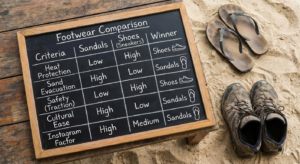
This is the biggest disadvantage. When fine sand gets trapped between a sandal strap and your skin, every step acts like sandpaper. Over a few hours, this can literally strip the top layer of skin off your feet, leading to raw, stinging sores. If you have sensitive skin, this makes the choice of should we wear sandals or shoes in safari desert lean heavily toward shoes.
4. Analyzing Shoes: Stability, Protection, and Heat Traps
If you choose shoes, you are prioritizing the “Adventure” in “Desert Adventure.”
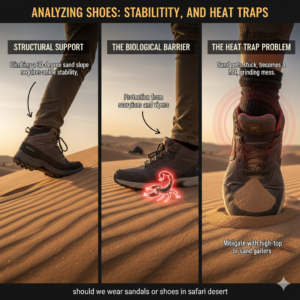
Structural Support
Climbing a 30-degree sand slope requires ankle stability. Sneakers or light hiking boots provide the grip and support needed to prevent sprains. When you ask should we wear sandals or shoes in safari desert for a morning trek, shoes are the only safe answer.
The Biological Barrier
While rare, the UAE desert is home to scorpions and saw-scaled vipers. While they typically flee from the noise of a safari group, a closed shoe provides essential peace of mind.
The Heat Trap Problem
The downside? Once sand enters a shoe, it’s stuck. It can become a hot, grinding mess. To mitigate this, wear high-top sneakers or “sand gaiters” to keep the silica out of the ankle collar.
5. Activity-Specific Footwear: From Dune Bashing to Sandboarding
Activity‑Based Footwear Choices
The answer to should we wear sandals or shoes in safari desert experiences depends heavily on planned activities.
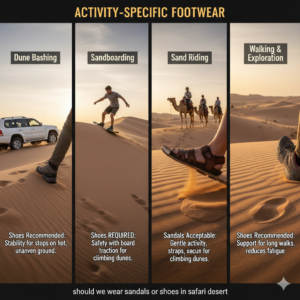
Dune Bashing
While dune bashing occurs inside a vehicle, occasional stops may require stepping onto hot sand. Shoes are recommended for stability and protection during these moments.
Sandboarding
Sandboarding requires shoes. Boards use straps or bindings that can cause injury to bare feet. Shoes also provide traction when climbing dunes between rides.
Camel Riding
Sandals are acceptable for camel riding, as the activity is gentle. However, travelers should ensure sandals are secure to avoid dropping them during mounting or dismounting.
Walking and Exploration
For extended walking or exploration around the desert, shoes provide better support and reduce fatigue over time.
6. Seasonal Impact: Summer Heat vs. Winter Chills
In our analysis of is it too hot for desert safari in july, we highlighted that summer sand is essentially a liquid heat source.
- Summer (May-September): The answer to should we wear sandals or shoes in safari desert is strictly Shoes. You need the thermal insulation.
- Winter (October-April): The desert can get surprisingly cold at night (down to 12°C). Sandals will leave your toes freezing during the BBQ dinner. Again, shoes or hybrid boots are often better.
7. Medical Risks: Burns, Blisters, and Desert Hygiene
Choosing should we wear sandals or shoes in safari desert isn’t just about fashion; it’s about health.
- Thermal Burns: As surface temperatures hit 60°C, the skin on the bottom of the feet can blister instantly.
- Friction Blisters: The combination of sweat and sand is a recipe for medical distress.
- Insects: While not a common threat, a closed shoe is a primary defense against desert fauna.
8. The 2026 Hybrid Strategy: The Expert Choice
In 2026, the “Pro” move for travelers is the Two-Step Strategy.
When people ask me should we wear sandals or shoes in safari desert, I tell them: “Wear shoes for the action, carry sandals for the camp.”
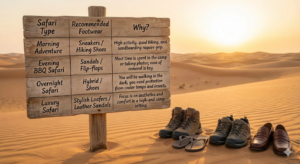
- The Arrival: Wear breathable, mesh sneakers for the ride and dune activities.
- The Sunset: Change into sandals once you arrive at the Al Khaima Heritage Camp to enjoy the carpets and the dinner.
9. Cultural Etiquette: Footwear in the Bedouin Majlis
Respect is at the heart of the UAE experience. In a traditional Bedouin tent or Majlis, shoes are seen as “outside” items that carry dust.
When you ask should we wear sandals or shoes in safari desert, consider the convenience of removal. If you are wearing boots with 12-inch laces, you will be the last person to sit down for dinner! Slip-ons or sandals are highly valued in these social settings.
10. Sustainable Footwear: Protecting the Ecosystem
The desert is a fragile ecosystem. Heavy, deep-lugged hiking boots can crush the “cryptobiotic crust”—a layer of organisms that prevents erosion.
When deciding should we wear sandals or shoes in safari desert, consider lightweight, flat-soled shoes that “float” on the sand. This helps preserve the beauty of the dunes for the next generation of travelers.
11. Post-Safari Care: Cleaning Your Gear
No matter what you choose, you will take half the desert home with you.
- For Shoes: Use a vacuum hose to pull sand out of the mesh before washing. Never use hot water, as it can set the “sand-stains” into the fabric.
- For Sandals: A simple rinse with fresh water is usually enough.
12. The Final Verdict Table
So, should we wear sandals or shoes in safari desert landscapes?
The answer depends on your travel style, activities, and season.
For adventure‑focused travelers, shoes are essential. For relaxed, social experiences, sandals may be sufficient. For the most comfortable and prepared travelers, carrying both is the smartest option.
The desert is a place of beauty, challenge, and contrast. Choosing the right footwear ensures that your experience remains memorable for all the right reasons, allowing you to enjoy the landscape without unnecessary discomfort.
Conclusion: Making Your Choice
So, should we wear sandals or shoes in safari desert?
If you are an adventure seeker, go with Shoes. If you are there for the photos and the food, go with Sandals. If you want the perfect trip, Bring Both.
The desert is waiting for you in 2026. Don’t let a blister ruin the view. For more tips on preparing for your trip, check out our guide on is there signal in dubai desert safari.

