Wondering is it too hot for desert safari in July?
Discover 7 expert tips on beating the heat, best tour timings, and summer discounts in this 2026 guide.
Introduction: Facing the Arabian Summer Heat
Is it too hot for desert safari in July? This question echoes through travel forums and travel agency offices every year as the summer solstice passes. As we enter 2026, Dubai has solidified its status as a year-round destination, but the reality of the Arabian sun remains a formidable topic for any visitor. When the city temperatures begin to climb toward the mid-40s, the prospect of heading into the vast, unshaded expanse of the desert can feel like a daring feat of endurance.
However, the desert has a way of surprising those who dare to visit during the “off-peak” months. In this exhaustive 2200-word guide, we will analyze the environmental, logistical, and physical factors of a summer safari. We will debunk myths, provide actionable safety advice, and ultimately help you decide if the mid-summer dunes are a paradise or a furnace. Whether you are a budget-conscious backpacker or a luxury seeker looking for exclusivity, understanding the nuances of the July climate is your first step toward a successful adventure.
The Climate Science: Why July is Unique
To accurately address if is it too hot for desert safari in July, we must look at the meteorological data that defines the UAE summer. July is historically the hottest month in the United Arab Emirates. The sun reaches its highest point, and the duration of daylight provides maximum time for the sand to absorb thermal energy.
July Temperature Statistics (2026 Forecast)
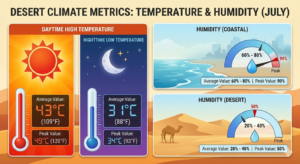
The most important takeaway from this data is the humidity differential. While Dubai city feels “sticky” and oppressive due to its proximity to the Arabian Gulf, the desert is an arid environment. This lack of moisture in the air allows for a process called evaporative cooling. When you sweat in the desert, it evaporates almost instantly, which is the body’s natural way of cooling down. In the city, sweat often stays on the skin, making the heat feel much worse than it actually is.
The Direct Answer: Is It Too Hot for Desert Safari in July?
The short, honest answer is: It is very hot, but it is not “too hot” for a professional, well-organized safari.
For a healthy individual, a July desert safari is a manageable and rewarding experience, provided you are not attempting a self-drive trek at high noon. Professional tour operators have spent decades perfecting the art of the summer safari. They utilize high-performance air conditioning, adjust their schedules to avoid the peak UV hours, and provide infrastructure that creates an “oasis” effect in the dunes.
However, if you are traveling with very young infants, the elderly, or individuals with chronic respiratory or cardiovascular conditions, you must exercise extreme caution. For everyone else, the heat is simply another element of the adventure—one that comes with significant rewards, which we will explore in the following truths.
Truth 1: The Advantage of Dry Heat Over Humidity
Many travelers ask is it too hot for desert safari in July because they are judging the heat based on their experience in the city. As we noted, the desert heat is “dry heat.”
Biologically, humans are much better at handling 45°C in a dry environment than 35°C in a humid one. In the dry air of the Lahbab or Margham dunes, your body’s cooling systems work at 100% efficiency. Furthermore, the desert sand does not retain heat in the same way that the asphalt and concrete of Sheikh Zayed Road do. As soon as a breeze kicks up, the moving air provides genuine relief, whereas in the city, the wind often feels like a hairdryer.
Truth 2: How 2026 Technology Cools the Dunes
In 2026, the technology used in desert camps has reached a pinnacle. Leading operators like Al Khaima Tours have moved far beyond simple tents.
Industrial Misting Systems
Modern camps are ringed with high-pressure misting lines. These systems atomize water into micro-droplets that flash-evaporate, lowering the ambient temperature in the seating area by as much as 10 to 12 degrees Celsius.
Portable AC and Cooling Fans
VIP areas and “Majlis” seating are now frequently equipped with portable, heavy-duty air conditioning units and “ice-fans”—large fans that blow air over chilled coils. This ensures that even in July, you can enjoy your BBQ dinner in relative comfort.
High-Spec Vehicles
The 4×4 vehicles used for dune bashing in 2026 are equipped with “Gulf-Spec” cooling systems. These are designed to keep the cabin at a crisp 20°C even when the external temperature is 50°C. You spend the most “active” part of your safari—the dune bashing—in total climate-controlled luxury.
Truth 3: Strategic Timing is Everything
If you are worried that is it too hot for desert safari in July, you should look closely at the itinerary timings. No reputable company runs a mid-day safari in the summer.
-
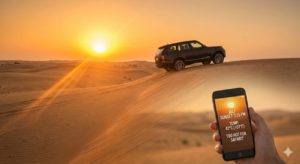
The Evening Safari (Recommended): These tours usually depart the city between 3:30 PM and 4:30 PM. By the time you reach the desert, the sun is already losing its “sting.” The dune bashing takes place during the “Golden Hour,” and the camp activities happen after sunset when the temperature begins its steady decline.
-
The Morning Safari: These start as early as 4:30 AM. You experience the desert at its coolest point, watch a spectacular sunrise, and are back in your hotel breakfast room by 9:00 AM.
-
The Overnight Safari: This is actually a hidden summer gem. The desert night is significantly cooler than the city night. Sleeping under the stars in July, with a gentle desert breeze, is a peaceful experience that few tourists ever get to have.
Truth 4: The Incredible Value of Low-Season Pricing
One of the biggest incentives for those asking is it too hot for desert safari in July is the price tag. July is the heart of the “low season” in the UAE.
Because many tourists avoid the summer, operators offer massive discounts. You can often book a “Premium” or “VIP” safari for the price of a standard budget tour. This means you get better food, more attentive service, and better seating for a fraction of the winter cost. For the budget-savvy traveler, the heat is a small price to pay for such high-value luxury.
Furthermore, the camps are less crowded. During the winter, a camp might host 400 people. In July, you might share the camp with only 40 or 50 people. This creates an intimate, exclusive atmosphere that makes your photography easier and your experience much more personal.
Truth 5: Health, Hydration, and Summer Safety
Safety is the most critical component when answering is it too hot for desert safari in July. Heatstroke and dehydration are real risks, but they are entirely preventable.
The Hydration Protocol
You must drink at least 3-4 liters of water on the day of your safari. Don’t wait until you are thirsty; by then, you are already slightly dehydrated. Reputable operators like Al Khaima Tours provide unlimited chilled water and electrolyte-rich soft drinks throughout the journey.
Electrolyte Balance
Sweating depletes your salt levels. During your BBQ dinner, make sure to eat some of the salty appetizers like olives or feta cheese. This helps your body retain water and prevents muscle cramps.
Sunscreen and Protection
The UV index in July is extremely high. Apply a broad-spectrum SPF 50+ sunscreen 30 minutes before leaving your hotel and reapply it after your dune bashing session. Even if you don’t feel “burnt” because of the AC, the UV rays are still penetrating the windows of the car.
Truth 6: Photography and the “Summer Glow”
For photographers, the question isn’t is it too hot for desert safari in July, but “how is the light?”
July sunsets in the desert are unique. The heat creates a “shimmer” or mirage effect on the horizon that can produce some of the most surreal and beautiful landscape shots imaginable. Additionally, because there are fewer people, you don’t have to spend hours editing “strangers” out of the background of your photos.
Pro Tip: In the summer heat, your camera gear can “fog up” when you move from the cold AC of the car into the hot desert air. Carry a soft microfiber cloth and allow your lens to acclimate for a few minutes before you start shooting that perfect sunset.
Truth 7: Choosing the Right Summer Operator
The difference between a miserable summer trip and a magical one lies entirely in the operator. A budget company might use older cars with failing AC or provide “warm” water.
When you book with a top-rated company, you are paying for the peace of mind that your comfort is their priority. Check reviews on TripAdvisor specifically for the months of June, July, and August. Look for mentions of “cold water,” “AC,” and “misting fans.” If an operator has a 5-star rating in the middle of July, you know they are doing something right.
What to Wear: Beating the Heat Stylishly
Your clothing is your primary defense. If you’ve read our article on is it fit to wear a jalabiya for desert safari, you know that traditional wisdom wins every time.
-
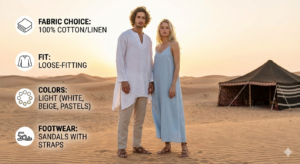
Fabric Choice: Stick to 100% cotton or linen. Avoid polyester and nylon, which trap heat.
-
Fit: Loose-fitting clothes are essential. They allow for the “chimney effect” of airflow.
-
Colors: Light colors (white, beige, pastels) reflect heat. Dark colors absorb it.
-
Footwear: Sandals with straps are perfect. Flip-flops can get “stuck” in the soft, hot July sand.
By dressing appropriately, you solve half the problem of the summer heat before you even leave your hotel room.
Conclusion: Embracing the Shimmering Sands
So, is it too hot for desert safari in July?
If you seek a quiet, exclusive, and high-value adventure, the answer is a resounding No. While the temperatures are high, the combination of modern cooling technology, smart scheduling, and the unique physics of dry desert heat makes it a viable and exciting summer activity.
By choosing a professional operator like Al Khaima Tours, staying hydrated, and dressing for the climate, you can experience the desert at its most raw and beautiful. July in the dunes is not a test of endurance; it is an invitation to see a side of Arabia that most tourists miss. The golden sands are waiting, the shimmer of the horizon is calling, and the summer discounts are yours for the taking.
Ready to braving the heat? Make sure you stay connected during your journey by reading our guide on Free Wi-Fi in Desert Safari camps, or if you’re planning a weekend visit, see our tips for a Dubai Desert Safari on Friday.

