Baby Desert Safari Guide
A baby desert safari is one of the most common concerns parents have when planning a holiday in Dubai or Abu Dhabi. A desert safari promises golden sand dunes, camel rides, sunset views, cultural shows, and relaxing evenings under the stars. However, when you are traveling with an infant, comfort and safety become more important than adventure.
If you are wondering can a baby go on a desert safari, the answer is yes—but only if you choose the right type of baby desert safari and avoid risky activities. Babies are allowed on desert safaris under strict safety guidelines, and parents must carefully select family-friendly safari options that prioritize comfort over thrill.
This complete baby desert safari guide explains everything parents need to know before booking. From safety rules and suitable activities to weather concerns, feeding, toilets, and transportation, this article covers every detail so you can make an informed decision and enjoy the desert safely with your baby.
Is a Baby Desert Safari Safe for Infants?
A baby desert safari can be safe when parents choose the correct safari format and a reputable tour operator. Safety mainly depends on avoiding activities that involve sudden movement, high speed, or physical strain.
Babies can safely join a desert safari if the experience focuses on sightseeing, cultural activities, and relaxed travel rather than extreme adventure. The desert environment itself is not dangerous for babies, but certain activities are not suitable for infants due to their developing bodies.
Understanding what is safe and what is prohibited is the key to planning a baby desert safari without stress or risk.
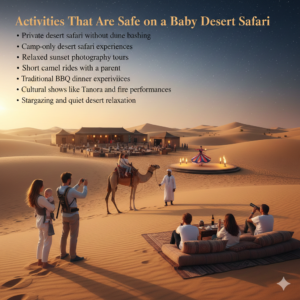
Activities That Are Safe on a Baby Desert Safari
Babies can safely participate in the following desert safari experiences when accompanied by parents:
• Private desert safari without dune bashing
• Camp-only desert safari experiences
• Relaxed sunset photography tours
• Short camel rides with a parent
• Evening desert camp activities
• Traditional BBQ dinner experiences
• Cultural shows like Tanoura and fire performances
• Stargazing and quiet desert relaxation
These options allow parents to enjoy the beauty of the desert without exposing babies to rough movements or unsafe conditions.
Activities Babies Cannot Join on a Desert Safari
While planning a baby desert safari, parents must completely avoid certain activities that pose safety risks. These activities are strictly not allowed for infants by professional tour operators.
Babies must not join:
• Dune bashing
• High-speed off-road driving
• Quad biking
• Dune buggy rides
• Sandboarding
• Any activity requiring seatbelt-based thrill rides
These activities involve intense motion and unsecured seating, which can harm a baby’s neck, spine, and overall physical development.
Why Dune Bashing Is Not Allowed on a Baby Desert Safari
Dune bashing is the most thrilling part of a traditional desert safari, but it is also the most dangerous for infants. The vehicles move rapidly up and down steep dunes, creating sudden drops, bumps, and sharp turns.
For a baby desert safari, dune bashing is unsafe because:
• Babies do not have full neck control
• Infant spines are still developing
• Car seats are not designed for extreme off-road angles
• Sudden jolts can cause serious injury
• Seatbelt positions are unsafe for infants during bashing
Because of these risks, tour operators legally prohibit babies under three years from participating in dune bashing without exception.
Best Baby Desert Safari Options for Parents
Choosing the correct safari package is the most important decision parents will make. The following are the safest and most recommended baby desert safari options.
Private Baby Desert Safari (Best Option)
A private baby desert safari is the safest and most flexible option for parents traveling with infants. With a private vehicle, parents can fully customize the experience and avoid all unsafe activities.
Benefits include complete control over the journey, spacious seating for baby gear, flexible timing, and a relaxed pace. The driver can skip dune bashing entirely and take you directly to calm desert locations and camps.
This option is ideal for newborns, infants, and parents who want maximum comfort and privacy.
Desert Safari Without Dune Bashing
Many tour operators offer desert safari packages without dune bashing specifically designed for families with babies. These are sometimes called soft desert drive or direct-to-camp safaris.
In this baby desert safari option, the vehicle travels slowly over flat desert terrain or paved roads, ensuring minimal movement. Parents still enjoy camel rides, desert views, BBQ dinner, and cultural entertainment without risk.
Evening Desert Camp-Only Experience
A camp-only baby desert safari allows families to reach the desert camp directly by road without driving through dunes. This is the calmest and least physically demanding option.
Parents can relax in shaded seating, enjoy dinner, watch live shows, and experience desert ambiance while the baby remains comfortable throughout the visit. This option is perfect for very young babies or first-time parents.
Can You Bring a Stroller on a Baby Desert Safari?
Parents frequently ask if strollers are allowed on a baby desert safari. The answer is yes, but with limitations. Desert sand is uneven, and stroller wheels often sink into soft dunes.
A lightweight stroller may work around the camp area, but many parents prefer baby carriers or slings. Carriers allow parents to move freely while keeping the baby close and secure.
Weather Conditions and Baby Desert Safari Safety
Weather plays a crucial role in planning a baby desert safari. Desert temperatures vary dramatically between day and night.
During the day, the desert can be extremely hot, especially in summer. At night, temperatures may drop quickly, particularly in winter months.
Parents should always choose an evening baby desert safari, which runs between 3 PM and 9 PM. This time offers cooler temperatures, gentle sunlight, and a more comfortable environment for infants.
Winter months from October to March are ideal for a baby desert safari, while peak summer months should be avoided.
Clothing and Essentials for a Baby Desert Safari
Packing correctly makes a huge difference in comfort. Babies should wear light cotton clothing that allows airflow and prevents sweating.
Parents should bring a light blanket for cooler evenings, a baby hat for sun protection, and gentle sunscreen if the safari includes sunset hours. Extra clothes are recommended in case of spills or temperature changes.
Baby Feeding and Food Arrangements in the Desert
Feeding concerns are common among parents planning a baby desert safari. Fortunately, parents are allowed to bring all baby food and essentials.
You can carry milk bottles, formula, baby food jars, snacks, and water. Most desert camps provide hot water, and premium camps may offer microwaves.
It is always advisable to inform your tour operator in advance so they can assist with seating and feeding arrangements.
Toilet and Changing Facilities on a Baby Desert Safari
All established desert safari camps provide toilets with running water. Parents can comfortably change diapers and manage baby hygiene throughout the experience.
Premium baby desert safari camps often include cleaner washrooms, better lighting, and more convenient changing areas. While there may not be full baby changing tables, parents usually find ample space to manage diaper changes.
Can a Baby Ride a Camel on a Desert Safari?
Camel rides are possible on a baby desert safari under strict conditions. Babies are only allowed on camel rides if seated securely with a parent.
The ride must be short, slow, and led by a trained handler. Camels used for tourist rides are well trained and guided carefully, minimizing movement. Parents should assess their baby’s comfort before riding.
Car Seat Requirements for a Baby Desert Safari
A car seat is mandatory for transporting a baby on a desert safari. Parents must either request a baby car seat from the tour operator or bring their own.
Car seats are essential during hotel pickup, drop-off, and any road travel. While dune bashing is skipped, safe seating is still required for smooth desert drives.
Always confirm car seat availability during booking to avoid last-minute issues.
Best Type of Baby Desert Safari to Choose
The most recommended option for parents is a private evening baby desert safari without dune bashing. This option offers optimal safety, comfort, flexible timing, and peaceful surroundings.
Parents benefit from cooler weather, fewer crowds, personalized service, and greater control over how long they stay at the camp.
Best Time of Year for a Baby Desert Safari
The best time for a baby desert safari is between October and March when the weather is mild and pleasant. Evening tours are ideal as temperatures drop and the environment becomes calmer.
Parents should avoid midday and summer safaris due to extreme heat and dehydration risks.
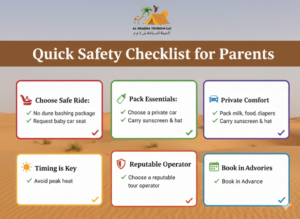
Quick Baby Desert Safari Safety Checklist for Parents
Before booking, ensure your safari includes no dune bashing, private or soft driving options, baby car seat availability, shaded seating, clean washrooms, evening timing, and a reputable tour operator.
Bring essential items such as diapers, wipes, feeding supplies, extra clothes, sunscreen, blanket, and baby carrier.
A baby desert safari is completely possible when parents plan responsibly and choose the right safari format. Avoiding dune bashing, selecting private or camp-only experiences, and traveling during cooler hours ensures safety and comfort for infants.
With proper planning, your baby can safely enjoy the sights, sounds, and serenity of the desert while parents create unforgettable family memories in Dubai or Abu Dhabi.
A baby desert safari does not need to be stressful. With the correct choices, it can be a calm, beautiful, and rewarding experience for the entire family.

