Is it really fit to wear jalabiya for desert safari adventures,
or should you stick to standard hiking gear? This is a question that many first-time travelers to Dubai, Sharjah, and Abu Dhabi ask as they prepare for their journey into the vast Arabian dunes. While most people pack shorts and t-shirts, others look at the traditional, flowing garments of the region and wonder if local wisdom holds the secret to staying cool.
In this comprehensive guide, we will explore 7 practical truths about why it is fit to wear jalabiya for desert safari excursions. From the thermodynamics of loose fabric to the safety concerns of dune bashing, we cover everything you need to know to dress for success in the sand.
Introduction: The Great Desert Dress Code Debate
If you are planning a trip to the UAE, the question of whether it is fit to wear jalabiya for desert safari adventures is one of the most interesting dilemmas you will face. Most tourists automatically pack cargo shorts, moisture-wicking t-shirts, and heavy-duty sneakers, assuming that “hiking gear” is the only way to survive the dunes. However, if you look at the people who have lived in the Arabian Peninsula for thousands of years, you won’t see them in Spandex or denim. Instead, you see the flowing, graceful silhouette of the jalabiya.
In this guide, we will dive deep into why it is fit to wear jalabiya for desert safari excursions. We will explore the science of desert clothing, the cultural significance of the garment, and provide a balanced view on safety and practicality. Whether you are aiming for the perfect Instagram shot or simply want to stay as cool as possible in 40°C heat, understanding the role of traditional attire is essential for your 2026 desert journey.
What Exactly is a Jalabiya?
Before we discuss if it is fit to wear jalabiya for desert safari, we must define the garment. A jalabiya is a traditional, ankle-length, loose-fitting robe. In various parts of the Arab world, it goes by different names, thobe or kandura for men in the Gulf, and jalabiya or abaya for women, often featuring intricate embroidery and vibrant colors.
Unlike Western clothing, which often emphasizes the shape of the body, the jalabiya is designed to create a “microclimate” around the wearer. It is the original “tech-wear” of the Middle East, perfected over millennia to handle the extreme fluctuations of the desert environment.
7 Reasons Why It Is Fit To Wear Jalabiya For Desert Safari
When people ask, “Is it fit to wear jalabiya for desert safari?” they are usually looking for a balance of comfort and culture. Here are the seven primary reasons why this garment is a superior choice for the dunes.
1. Superior Thermal Regulation
The desert heat is unforgiving. Tight clothing traps a layer of hot air against your skin, causing you to sweat more and dehydrate faster. When you wear jalabiya for desert safari, the loose fabric allows air to circulate freely. This “chimney effect” pulls cooler air in from the bottom and allows hot air to escape from the neck and sleeves, keeping your body temperature significantly lower than if you were wearing tight jeans.
2. Total UV Protection
Sunscreen is a must, but it can get greasy and sand-clogged. A jalabiya provides a physical barrier against the sun’s harsh UV rays. By covering your arms and legs with a lightweight, breathable fabric, you reduce the risk of sunburn without the need to reapply lotion every hour. This is a major reason why local guides always choose to wear jalabiya for desert safari work.
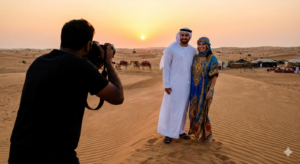
3. Stunning Photographic Aesthetics
Let’s be honest: a desert safari is a once-in-a-lifetime photo opportunity. Against the golden backdrop of the Lahbab Red Dunes, a flowing jalabiya looks far more dramatic and elegant than a t-shirt. The way the fabric catches the desert wind at sunset creates a sense of motion and timelessness that is perfect for professional-grade photography.
4. Cultural Respect and Immersion
Wearing traditional clothing is a sign of respect for Emirati heritage. When you arrive at a camp managed by professional operators like Al Khaima Tours, the staff often appreciates seeing guests embrace the local culture. It breaks the ice and makes your experience feel like a genuine exchange rather than just a tourist activity.
5. Protection from Wind-Blown Sand
The desert isn’t just hot; it’s often windy. Fine sand can act like sandpaper on exposed skin. When you wear jalabiya for desert safari, your entire body is shielded from the “sand-blasting” effect that can occur during a breezy sunset.
6. Transitioning from Heat to Evening Chills
As we noted in our guide to Free Wi-Fi in Desert Safari, the desert environment changes rapidly. Once the sun goes down, temperatures can drop by 10-15 degrees. The jalabiya, which kept you cool during the day, now acts as a light insulating layer, protecting you from the evening desert chill during the BBQ dinner.
7. Ease of Movement for Traditional Activities
Whether you are sitting on a floor cushion for a Tanoura show or climbing onto a camel, a wide-skirted jalabiya offers a surprising range of motion. It doesn’t pinch or bind like trousers, making the “camp life” portion of the safari much more relaxing.
Choosing the Right Fabric: Cotton vs. Synthetic
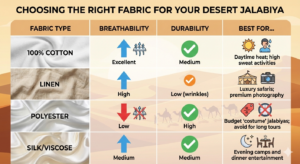
To ensure it is fit to wear jalabiya for desert safari, you must choose the right material. If you buy a cheap, 100% polyester “costume” jalabiya from a tourist souk, you will likely be miserable. Polyester does not breathe; it acts like a plastic bag, trapping heat and making you feel clammy.
-
Cotton (The Gold Standard): Look for “Malmal” cotton or high-quality Egyptian cotton. It is absorbent, breathable, and feels soft against the skin.
-
Linen: Excellent for heat management, though it wrinkles easily. It gives a high-end, luxury feel to your safari outfit.
-
Rayon/Viscose: A good middle-ground that drapes beautifully for photos but is more breathable than polyester.
When you decide to wear jalabiya for desert safari, always check the tag. Natural fibers are your best friend in the dunes.
Safety First: When To Be Careful with Loose Clothing
While it is generally fit to wear jalabiya for desert safari, there are specific moments where you need to be cautious. Loose fabric can be a safety hazard if not managed correctly.
Dune Bashing
During the high-speed 4×4 drive, ensure your jalabiya is tucked in and not hanging out of the car door. The sudden movements of the car can cause loose fabric to get caught in seatbelt mechanisms or door latches.
Quad Biking and Sandboarding
This is the most dangerous time to wear jalabiya for desert safari without modification. Flowing fabric can get tangled in the wheels or chain of a quad bike. If you plan to be active, we recommend wearing leggings or trousers underneath and tucking the hem of the jalabiya into your waistband temporarily.
Camel Riding
Mounting a camel requires a wide step. If your jalabiya is too narrow or “pencil-cut,” you may struggle to straddle the camel comfortably. Ensure your garment has side slits or a wide enough circumference to allow for a comfortable ride.
Styling Tips for Men and Women
To look and feel your best when you wear jalabiya for desert safari, follow these styling tips:
For Women:
-
Accessories: Pair your jalabiya with a lightweight pashmina. It adds to the look and provides extra warmth if the desert night gets cold.
-
Colors: Deep blues, vibrant oranges, and rich purples look incredible against the sand. Avoid beige or yellow, as you might “disappear” into the background of the dunes!
-
Jewelry: Stick to simple gold or silver pieces. Heavy jewelry can get hot and uncomfortable in the sun.
For Men:
-
The Gutra/Shemagh: To complete the look, wear a traditional headscarf. It’s not just for show; it protects your neck and head from the sun.
-
Footwear: Avoid formal dress shoes. High-quality leather sandals or “desert boots” are the way to go.
-
The Agal: If you are wearing a headscarf, the black cord (agal) keeps it secure during the windiest parts of the safari.
Comparing Traditional Wear with Western Outfits
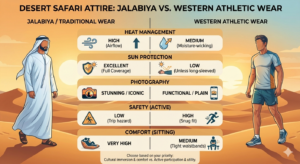
As shown in the table, it is highly fit to wear jalabiya for desert safari if your goal is comfort and culture, whereas athletic wear is better suited for those who plan on doing 2 hours of sandboarding and quad biking.
The Best Operators for a Culturally Immersive Experience
If you choose to wear jalabiya for desert safari, you want an operator that values that cultural connection. Al Khaima Tours is widely considered the best desert safari company in Dubai for those seeking authenticity. Their camps are designed to feel like traditional Bedouin settlements, making your choice of attire feel perfectly at home.
Other high-rated options include Platinum Heritage, which focuses on vintage Land Rovers and historical accuracy. When you book with these premium providers, you can be sure that your traditional dress will be met with appreciation and that the camp facilities (like restrooms and seating) are clean and high-quality.
Practical Logistics: What to Wear Underneath
The “secret” to being comfortable when you wear jalabiya for desert safari is what you wear underneath.
-
For Men: Wear light cotton shorts and a thin undershirt. This prevents the fabric from sticking to you and provides a layer of modesty.
-
For Women: Breathable leggings or “biker shorts” are a must. They allow you to climb dunes, ride camels, and sandboard with total confidence, knowing that your dress won’t blow up in the wind or restrict your movement.
By layering correctly, you ensure that it is always fit to wear jalabiya for desert safari, regardless of how active the tour becomes.
Conclusion: Embracing the Spirit of the Sands
In conclusion, it is not only fit to wear jalabiya for desert safari; it is often the most practical and enjoyable way to experience the Arabian desert. From the natural cooling properties of the loose fabric to the breathtaking photos you will cherish forever, the jalabiya is the ultimate desert garment.
As long as you choose natural fabrics like cotton, manage your safety during active sports like quad biking, and wear appropriate under-layers, you will find that the traditional way is often the best way. The desert is a place of ancient wisdom—and wearing the right clothes is the first step in unlocking that wisdom.

